
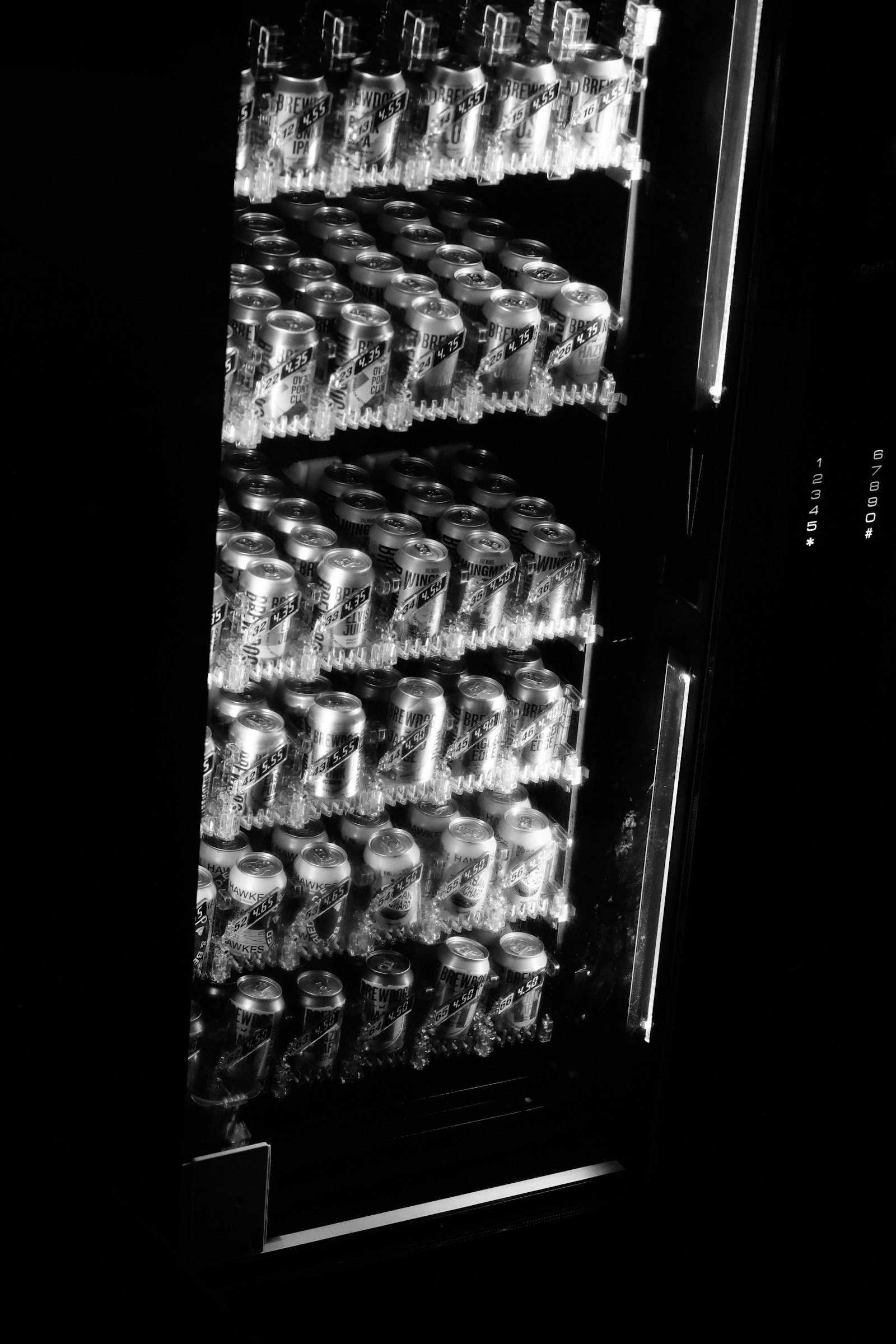
Read the full Homechow smart food vending case study for the complete breakdown. This post is the build story behind it — the problem, the architecture decision, and what shipped.
What does it actually take to make a smart vending machine "smart"?
Homechow came to us with hardware that worked. The kiosks could dispense food, take a card tap, report basic telemetry. What didn't exist was any of the software that makes a fleet of connected vending machines into an actual business: a way for customers to browse and order ahead, a way for restaurant partners to manage what's stocked and see what sold, a way for internal ops to monitor machine health across a growing number of locations, a public-facing site to represent the brand, and — underneath all of it — a reliable channel for the machines themselves to report state in real time. The hardware was the easy part. The software ecosystem around it was the actual product.
This is the gap that kills a lot of hardware-first startups: the device works in the lab, but nobody built the system that makes the device usable at scale by real customers and real operators. Homechow needed that system built from zero, end-to-end, under real deadline pressure to get pilot locations live.
The 3 challenges that shaped everything
Real-time coordination. A customer opens the app and sees what's in a specific machine, right now. A partner checks their dashboard and sees what needs restocking, right now. An admin watches machine health across every location, right now. All three are reading the same underlying state, and none of them can be allowed to be more than a few seconds out of date — because the cost of stale data here isn't a UI glitch, it's a customer paying for a meal item the machine no longer has.
Multiple independent interfaces. Five separate surfaces — customer app, partner app, admin dashboards, public website, machine layer — each needed to ship, get updated, and evolve on its own cadence without breaking the other four. A partner-app release couldn't be allowed to risk the customer-facing checkout flow. That's a coordination problem as much as an engineering one, and it's the reason this wasn't built as one monolithic app with different views bolted on.
Machine-level integration. The kiosks needed a dependable communication layer that reported inventory and machine health back to the platform continuously — not on a polling schedule that leaves a 10-minute blind spot, but close to real time, because every other interface's accuracy depends on this layer being right.
“”
Why 5 separate interfaces instead of one app
The instinct on a tight budget is to build one app and skin it differently for each user type. We didn't do that here, and the reason is specific to what this product actually is. A customer opens the app once a week to grab lunch. A partner uses their app daily, sometimes hourly, to manage stock across several machines. An admin needs dashboards built for pattern-spotting across a fleet, not a mobile-first checkout flow. The public website has to represent the brand to investors and new city partners who will never touch the ordering flow at all. And the machine layer isn't a UI at all — it's an API contract with hardware that doesn't care about any of the above.
Five different jobs, five different update rhythms, five different tolerances for risk. So we built five interfaces — React and Next.js for the admin dashboards and public site, Flutter, React Native, and Native Android across the customer and partner apps, PHP/Laravel and MySQL as the backend of record, AWS underneath all of it — all reading from and writing to one central real-time platform. Each interface can ship a release on Tuesday without anyone touching the other four. That's the whole point of the architecture: independence at the surface, consistency underneath.
This is the same principle we lean on for any custom software development engagement where a single "just build an app" brief actually hides multiple distinct products wearing one name.
What shipped, and what it's doing now
Homechow is live across multiple kiosk locations, all running on the unified backend described above. The company is actively scaling toward a funding round that values the business in the $30M–$50M range — a very different conversation than the one you can have with working hardware and no software layer behind it.
The architectural bet is already paying off in the way that matters most for a scaling hardware startup: new machines, new partner restaurants, and new markets slot into the existing platform without a rebuild. That was the design goal from day one, not a happy accident. When your product physically has to be manufactured, shipped, and installed in new cities, the software behind it cannot be the bottleneck on how fast you can grow. We treated the five-interface split as insurance against exactly that bottleneck, and it's held.
What this means if you're building something similar
If your product involves a physical device talking to more than one type of person — a customer, an operator, an internal team — the Homechow pattern is worth studying even if you're not in food vending. The underlying problem is the same whether it's a smart locker, a connected fitness kiosk, or a field-service IoT fleet: real-time state has to be the same truth for everyone touching it, and the interfaces built on top of that truth need enough independence to ship without stepping on each other.
We go deeper on the general version of this problem — sequencing, architecture decisions, and where teams get it wrong — in our guide to building software for IoT vending and smart retail kiosks, and in a practical MVP-to-multi-interface roadmap for hardware-connected startups sequencing their first build.
What we'd tell a founder starting from where Homechow started
If you're standing where Homechow stood — hardware that works, and a widening gap where the software should be — the temptation is to hire whoever's cheapest and fastest to "build an app." Resist that framing. The question isn't how fast someone can build an app; it's whether the team understands that you're really asking for five coordinated products sharing one real-time truth, and whether they've built that kind of system before. A generalist app shop will happily quote you a single monolithic build, and you won't feel the cost of that decision until you're trying to ship a partner-app update without risking checkout, or trying to add your fifteenth location and discovering the machine layer never had that scale in mind.
The other thing worth internalizing: the machine communication layer isn't a footnote you scope after the "real" app work. On Homechow, it was one of the three defining technical challenges of the entire build, on equal footing with the customer and partner experiences. Treat it that way from the first planning conversation, not as an integration task you bolt on at the end.
If you've got working hardware and a growing gap where the software should be, that's exactly the stage we like to start at.
FAQs
Frequently asked questions

Written by
Partha Sarathi Ghosh
Founder & Engineering Lead, DevOrbital
Partha leads DevOrbital, where his team has elevated 50+ businesses across MVP development, AI agents, custom software, and growth. He writes about the hidden mechanics of getting AI-generated code into production, MVP scope discipline, and the architecture decisions founders make too late.
Keep reading