
Powering a Smart Food Vending Network
Real-time orchestration across kiosks, customers, and operations.
RoleEnd-to-End Product Architecture · Multi-App Development · Machine Integration · Backend Systems · Ongoing Scale Support
Homechow · United States · 2025–Ongoing
Introduction
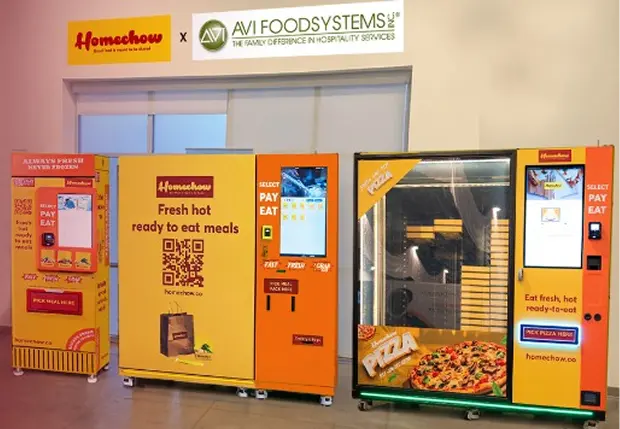
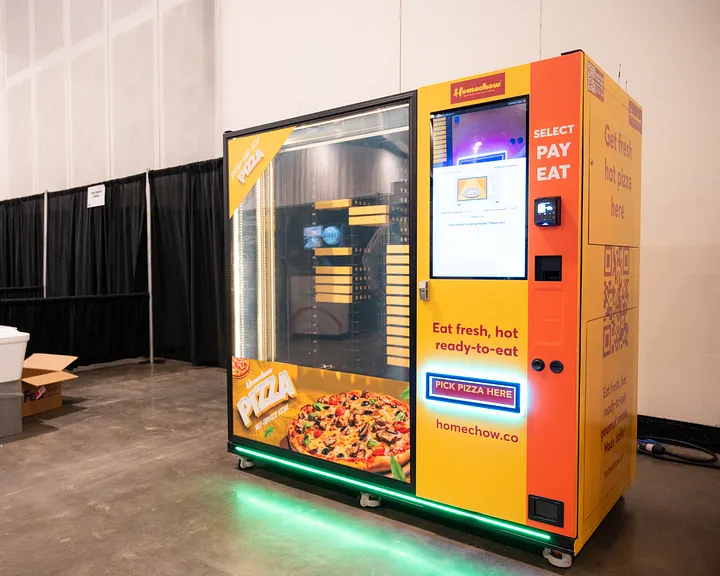
A US-based founder set out to create a new category of food vending — fresh, hot meals from smart kiosks. The vision required a tightly connected ecosystem across customers, machines, partners, and operations, all running in real time. DevOrbital came in as the end-to-end custom software development partner, turning that hardware-first vision into a working, real-time product across five connected interfaces.
Smart food vending hardware existed but the software ecosystem to make it usable across customers, machines, and partners did not. Multiple interfaces had to coordinate in real time without breaking the customer experience. Every layer — ordering, inventory, payments, and machine health — had to stay in sync down to the second, with no room for a stale screen to sell a meal that was no longer there.
The Challenge
What We Were Up Against
Building a category that didn't exist yet meant solving problems no playbook had answers for. Every one of them had to be solved in production, on live kiosks, with real customers already ordering.
Real-Time Coordination
Customers, machines, partners, and admins all needed to see the same live state — a single stale screen could mean a sold-out order going through.
Multiple Independent Interfaces
Five separate apps — customer, partner, admin, public site, machine layer — had to ship and evolve on their own schedules without breaking each other.
Machine-Level Integration
Smart kiosks needed a reliable communication layer to report inventory and health back to the platform in real time.
The Solution
How We Solved It
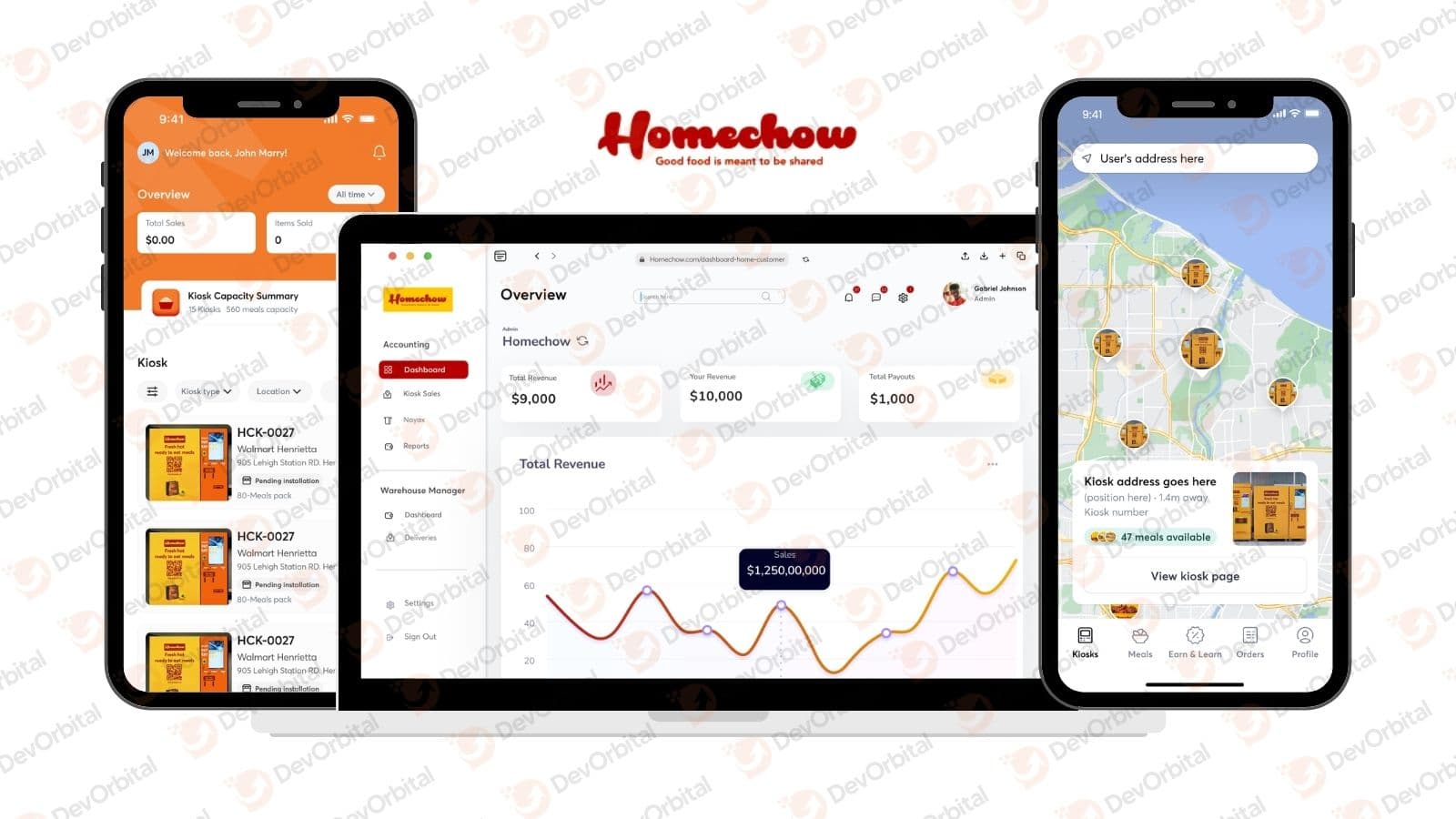
We designed a single product platform that unified customer ordering, partner operations, admin dashboards, and machine APIs into one real-time system — built so each layer could evolve independently. The architecture had to hold up as the kiosk network grew from a handful of pilot locations into a multi-city rollout.
Five tightly-integrated interfaces (customer app, partner app, admin web, public site, machine layer) coordinated through a central orchestration backend with live state and end-to-end observability. The result gives the founder a single source of truth across every kiosk, order, and partner — the kind of custom software and mobile app development foundation a hardware-first startup can't build without a dedicated product team.
InterfacesCustomer Mobile App · Partner / Vendor Mobile App · Admin Web Dashboards · Public Website · Machine Communication Layer
Built WithReal-time order orchestration · Machine-level workflow automation · Live inventory & operations tracking · Integrated payments & refunds · Location-based discovery · End-to-end operational visibility
The Impact
The Outcome
What started as hardware with no software backbone is now a funded, multi-location network. It's proof that the right software layer can turn a hardware bet into a fundable business.
Multi-Location Launch
Live across multiple kiosk locations with one unified backend running the entire network.
$30–50M Valuation in Sight
Now actively scaling toward a funding round valuing the business in the $30M–$50M range.
5 Interfaces Built to Scale
Each of the five interfaces can evolve independently, so new machines, partners, or markets slot in without a rebuild.
Like What You Just Read?
Let's talk about what you're building.
Every case study on this page started as a conversation. Book a free call or send us a quick message and we'll tell you what it'll take to get you a result like this one.
Tech Stack
Up Next
Ready to start?
Ready to Build Something Great?
Let's talk about your product, your goals, and the fastest path to getting there. No pressure — just a real conversation.