
The three questions each term actually answers
The confusion mostly comes from treating these as competing product categories. They're not. They answer three separate engineering questions.
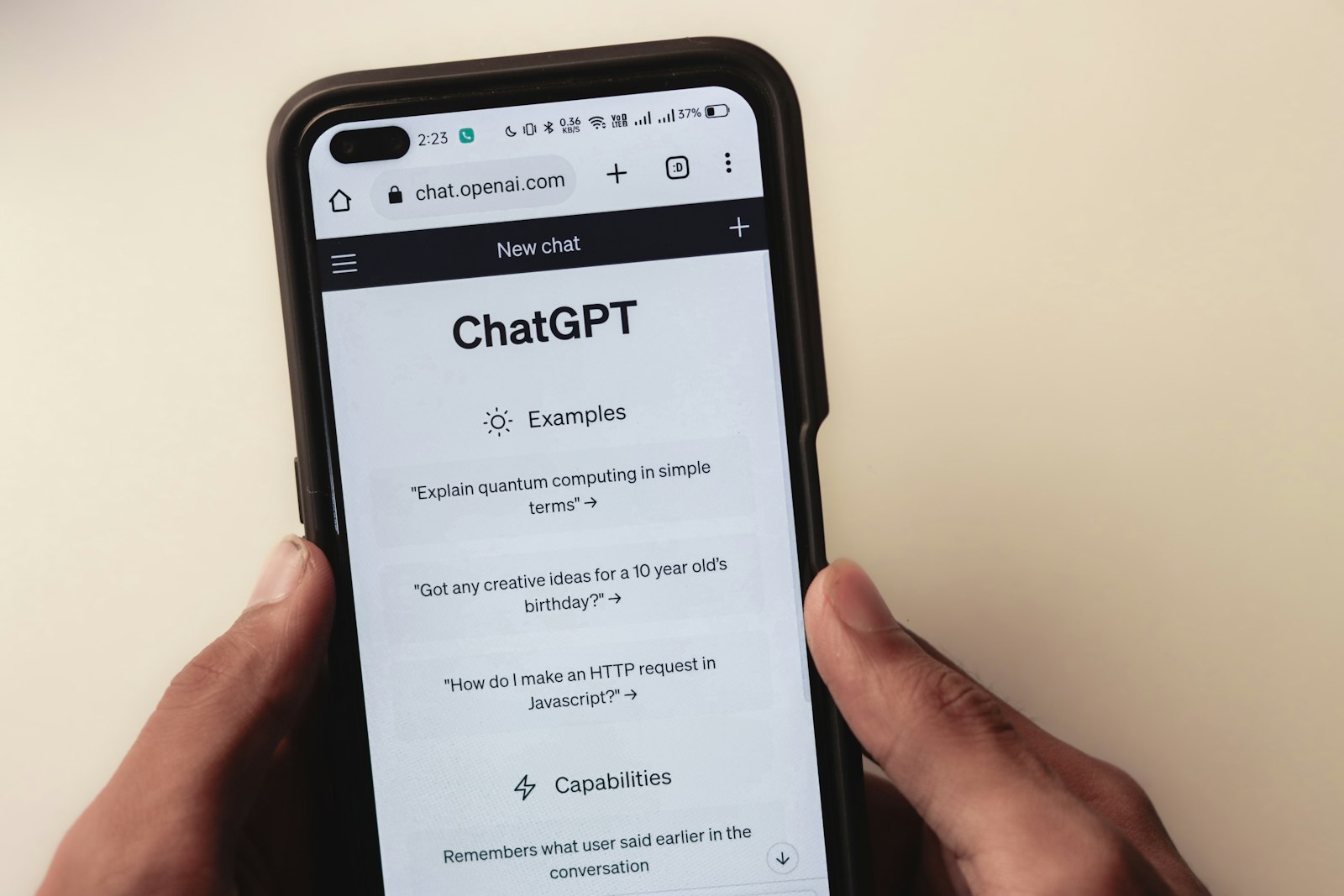
Chatbot answers: "How does the user interact with this?" It's an interface pattern — conversational, turn-based, back-and-forth. A chatbot can be extremely simple (decision-tree, no LLM at all) or quite sophisticated (LLM-powered, contextual, handles ambiguity well). What defines it as a chatbot is the interaction shape, not the intelligence underneath.
RAG answers: "Where does the model's knowledge come from?" Base LLMs only know what was in their training data, which is general and not about your business. RAG fixes that by retrieving relevant, specific information (your documents, your database records, your policies) at query time and feeding it to the model as context before it generates an answer. RAG is a knowledge-grounding technique, not an interaction pattern or a decision-making system.
Agent answers: "Who decides what happens next?" As covered in our agentic AI explainer, an agent is given a goal and tools, and decides its own sequence of actions rather than following a human-specified script. Agent-ness is about autonomy over the plan, independent of both interaction style and knowledge source.
You can mix and match all three, and most production systems do.
“”
How they actually combine in real systems
Chatbot + RAG, no agent: a support widget that answers questions from your help center. It retrieves relevant doc chunks (RAG), formats a conversational answer (chatbot), and does nothing beyond answering — no actions taken, no multi-step plan. This is the most common "AI feature" businesses build, and it's frequently mislabeled as "an AI agent" in marketing material. It isn't one, by the definitions that matter technically — and that's fine, it's often exactly what's needed.
Agent + RAG, no persistent chat interface: a backend system that processes incoming documents, retrieves relevant policy information to check against (RAG, used as a tool the agent calls), and takes multi-step action (classify, validate, route, flag) with no conversational interface at all — it might just write results to a database. This is agentic without being a chatbot.
Chatbot + Agent, minimal RAG: a conversational assistant that can actually take actions on your behalf — book a meeting, update a record, escalate a ticket — deciding which actions to take based on the conversation, without necessarily needing to retrieve much outside information to do it.
All three together: a customer service system that chats conversationally (chatbot), grounds its answers in your actual policies and order data (RAG), and can autonomously resolve multi-step requests like our refund walkthrough — retrieving relevant policy, checking conditions, deciding what action to take next (agent).
Decision table: which one fits your problem
| Your situation | What you need | |---|---| | Users need to ask questions and get answers grounded in your specific docs/data | RAG (wrapped in a chatbot interface if conversational) | | Users need a natural-language interface but the underlying logic is simple and fixed | Chatbot, possibly without RAG or agent — a decision tree might do | | The system needs to take multi-step action, not just answer questions | Agent | | The system needs to take action and the action depends on retrieving specific information first | Agent with RAG as one of its tools | | You want a conversational interface AND the system needs to act on the user's behalf | Chatbot + Agent | | The task is well-defined, repetitive, and doesn't need a conversational interface at all | Neither — plain automation, see our automation guide |
The single most useful question to ask when scoping: "Does this need to know something specific, decide something, or just talk?" Know something → RAG. Decide and act across steps → agent. Just talk, using general knowledge or fixed logic → chatbot, possibly without either of the other two.
Why the mislabeling happens, and why it matters
"Agent" markets better than "retrieval-augmented chatbot," so a lot of products that are really just RAG-backed chat interfaces get sold as agents. This isn't just a semantic gripe — it matters practically, because the three architectures have wildly different cost, complexity, and guardrail requirements. A RAG-based chatbot is a well-understood, relatively cheap build. A genuine agentic system needs input/output validation, an eval harness, and human-in-the-loop review for anything consequential — the full architecture we cover in the production agent gap piece. If you're scoping a build and a vendor calls it "an agent," ask directly: does it decide its own multi-step plan, or does it retrieve and answer? The honest answer determines what you should expect to pay and how long it should take.
Getting the scoping right from the start
Most projects that come to us mislabeled as "we need an AI agent" turn out, once we ask what the system actually needs to do, to need RAG-backed answering, or a well-built chatbot, or plain automation — each of which is cheaper and faster to ship than a true agent, and each of which is the right answer for what the business actually needs. The few that genuinely need agentic decision-making know it once the distinction is made clear: they have a multi-step process where the next action depends on what the previous one revealed, not just a question that needs a grounded answer. If you're not sure which camp you're in, talk to our AI agents team — getting this classification right up front is the difference between a project that ships in weeks and one that drags for months building infrastructure you didn't actually need.
FAQs
Frequently asked questions

Written by
Partha Sarathi Ghosh
Founder & Engineering Lead, DevOrbital
Partha leads DevOrbital, where his team has elevated 50+ businesses across MVP development, AI agents, custom software, and growth. He writes about the hidden mechanics of getting AI-generated code into production, MVP scope discipline, and the architecture decisions founders make too late.
Keep reading